
Dispatch Thoughts: Final Review
I can't think of a fun quip. Just read this, if you want. I'm tired.

Is it hard understanding
I’m incomplete?
A love that’s so demanding
I get weak
My Chemical Romance, “Famous Last Words”
That’s right. The epigraph is back. Evan. Dispatch. Go.
I was initially confused. After speaking with several folks around me in real life and online (students, friends, game critics), I knew that I needed time to reflect on the game.
But now, I’m ready to play it again on the terms the game was designed around.
And I’m ready to write this review, which I hope offers a few different perspectives than others you may have seen.
Check out my week-by-week thoughts on Dispatch (and a couple other short pieces) here: https://playmoore.substack.com/t/reviews
Today, I’m going to look at a couple things that make Dispatch stand out; the excellent execution of its central theme; and the importance of choice. If you’d ever like me to expand on any of the claims or frameworks I use, please let me know! I want to be sure that my writings here respond to real curiosity and questions.
Dialogue
This has some of the strongest dialogue I’ve encountered in a game in a long time. And what makes it so special is how the humor was formed organically in three parts: in Robert’s defined character aspects, in the near-unpredictable banter at work, and in the quiet moments.
Robert is his own guy, with my help
My favorite part of role-playing in videogames is that, often, my character is pre-defined with some specific aspects or required roles to fill. Shepard in Mass Effect will always use violence against bad guys in order to save the galaxy. Aloy in Horizon has motivations, concerns, and worldviews separate from my own. Lee in The Walking Dead always steps up to be Clem’s father figure and dear friend. I enjoy an open character creator with no preset requirements, but I enjoy slightly more the ability to walk in someone else’s shoes and see what they will do—with a little bit of my guidance.
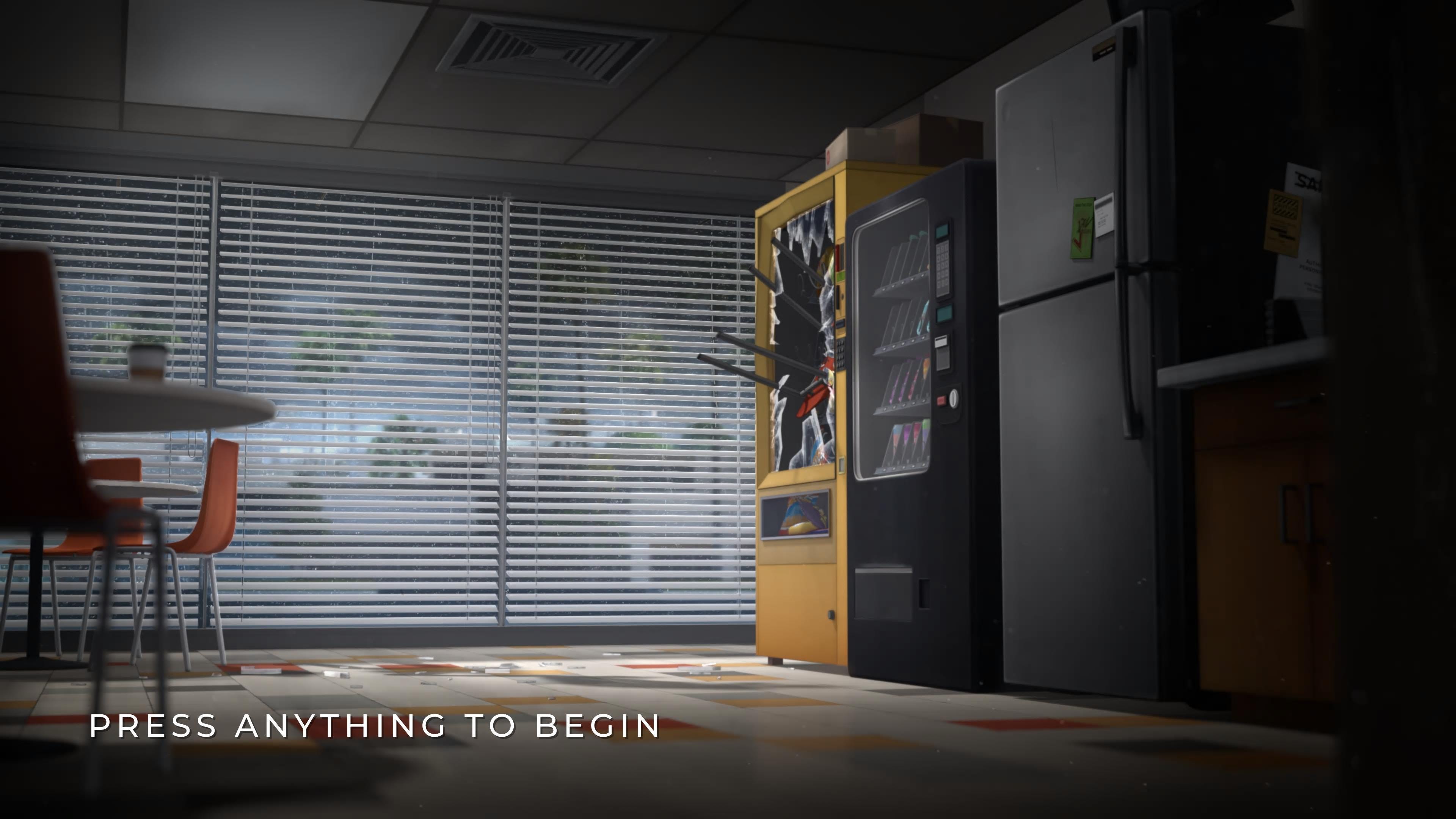
And in Robert, we got that. Dispatch gives us more control over Robert than most Telltale games allow for their player-character’s inner traits, but the definition is there. Robert will always throw something at Flambae in episode one. He always takes the SDN job and, outwardly, supports the company. He wants to be a good person and a hero (the deeper motivation is up to you, but little changes because of it). This worked for me. I loved his quick wit and his ability to keep up a bit. When I had an impulsive thought that an Evan with fewer inhibitions would do just to see what would happen, Robert had that option (and I went for it too often in my first playthrough—they really appealed to my inner chaos).
The variability within that set character, then, had some really nice moments. I could guide him more calmly, more sardonically, and more strictly. Every step made me feel like I was Robert—like I was complicit in his actions, and like I could help him become who he needed to be. I was, unsurprisingly, most reminded of Bigby (The Wolf Among Us) and Rhys (Tales from the Borderlands). Real and corruptible, but ultimately mine.
Banter always wins my heart
These characters really came alive in only ~10 hours of playtime. I’m genuinely impressed with how well I know them. Discovering synergies and applying skill points was satisfying and memorable, made all the better by the quips and the long-standing remarks as well during the dispatching shifts.
Also, seeing this pop up is still one of the funniest moments in my whole gaming history:

Sad but proud of good work. I can relate.
While the ending left me wanting a lot more to finish developing these characters, it seems that there’s a season two in the hopes of AdHoc’s team and a couple of the voice actors. I’d be utterly shocked if they weren’t thinking about a season two before launch.1
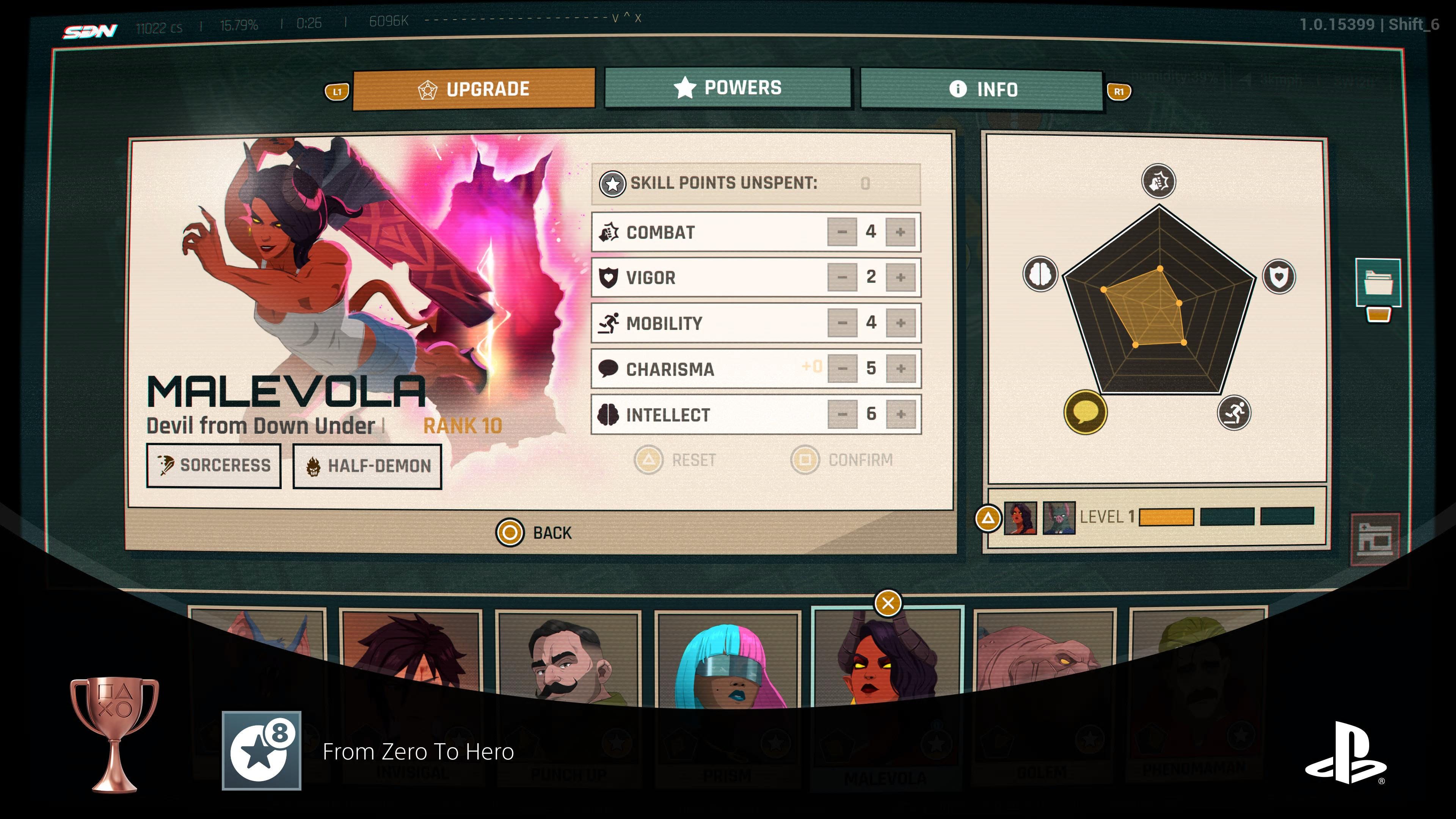
This is excellent news, in my mind. I should leave the game wanting more, rather than dreading the last few hours.2 But I dreaded nothing here. Give me more Malevola (my most used hero by far).
Back to the dialogue during shifts. I can’t help but reflect on the level of care and passion I got from the development team and the VAs. They gave their all. Laura Bailey and Aaron Paul especially stood out to me (and I don’t pay quite as much attention to acting as others), though they had my confidence before I began to play. Bailey just rocks every chance she gets.
The quiet moments
In game studies, we sometimes use the term “long shot” to refer to moments when the game forces the player to slow down, perform mundane and trivial tasks, and most importantly reflect on their decisions and situation so far. Ian Bogost uses the phrase to discuss Ethan taking care of Shaun in Heavy Rain (2010): Ethan must slow down, come to terms with losing his other son, and place guilt on himself all while having to prepare Shaun’s dinner and take care of a couple other tasks around the house.3
I like the idea of the long shot. It certainly sets games apart from most manifestations of other media, specifically in the culpability and immersion games provide. Even if it wasn’t necessarily my choice for the player-character to do some horrible act, I accept the reflection, guilt, and sorrow that comes from it.
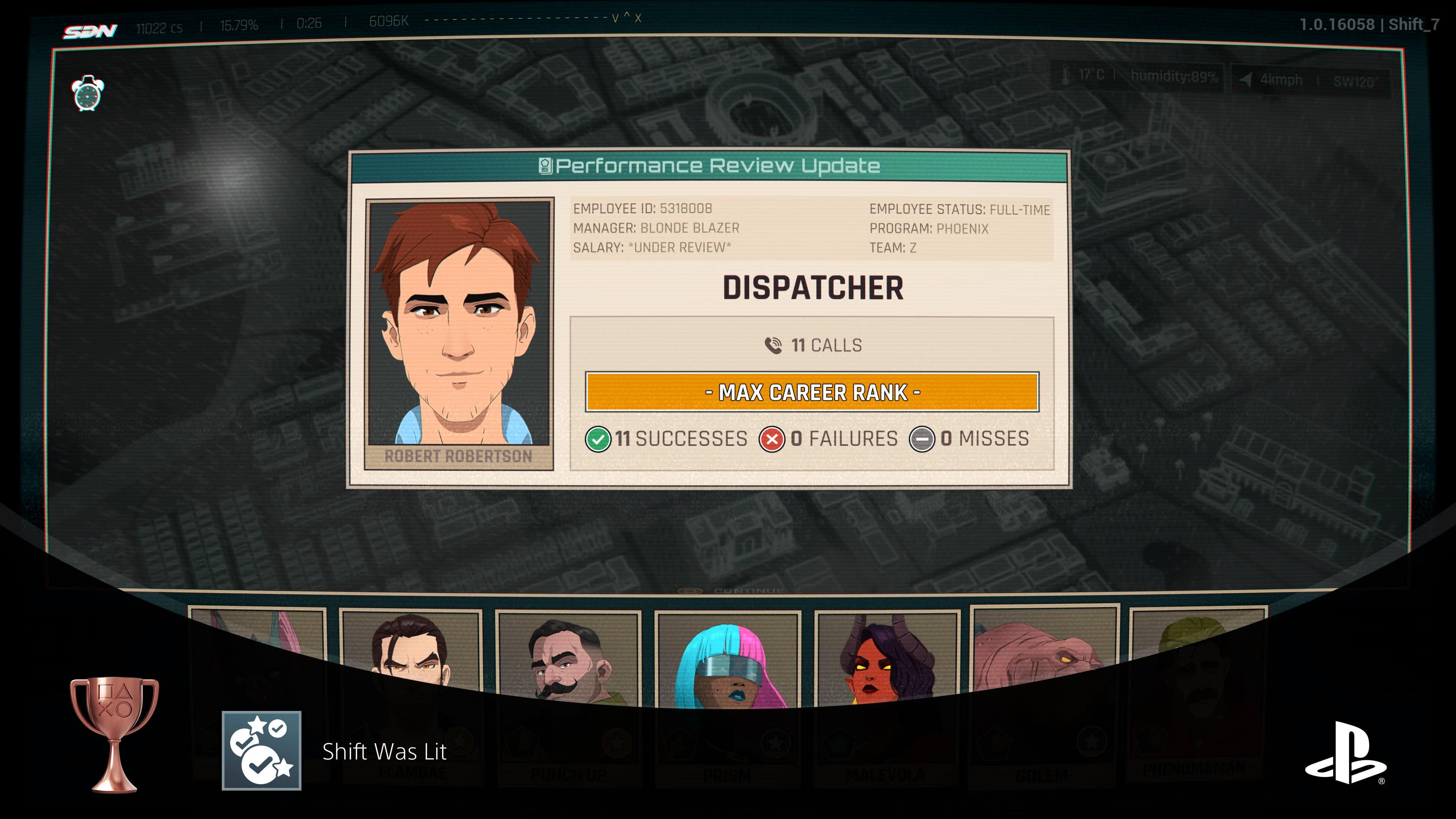
In Dispatch, the long shot appears in a few crucial scenes, all of which telling us yet more about Robert’s motivations and desire for companionship. Biggest of these was when he cries at Chase’s hospital bed. I’m glad the scene lingered there. I needed the time to soak it in.
The dispatching shift immediately following it was uncharacteristically slow and somber. It was an easy shift and so presented the player with a lighter urgency for reflexes and a greater ability to…just sit there and think about what’s happened and what might happen next.
Quiet and long moments came during the romance choices, too, and it is in reference to those moments, especially, at the end, that I apply the epigraph (which comes from the finale of The Black Parade). The romantic endings require attentive and close-to-perfect optimal choices to really achieve. It’s a demanding love, for sure. And regardless of your ending, despite victory, Robert feels incomplete to me. He has more to do and discover about himself.
Community, important work, and virtue
One of the greatest assumptions about Dispatch is that all people can always become better than what they were. There is never a doubt that the Z-Team will improve, never a belief stated that the work is hopeless. Part of Robert’s defined character is that he will always approve of, support, and work toward a Z-Team that truly turns former villains into heroes.
Second chances appear nearly nonstop throughout the game. Robert has the explicit and obvious opportunity to instigate or directly fight with a few characters in the beginning episodes, but none of those lock out your playthrough from eventually burying the hatchet and becoming close (or, in the case of Flambae, at least not directly harassing Robert as much).
The work of SDN for their subscribers is important, and the whole teams knows that. They put in crazy hours, including consistent evening shifts, to save bystanders’ lives, attack the Red Ring, and get coffee for some rich guy (I didn’t do this one, but you can!). Like I’ve pointed out before, while the game features tons of paratext that lends itself to satire or criticism of SDN as a corporation, the game itself presents SDN quite positively. I bet their hinted-at season two complicates it, but for now it’s clear to me that the work matters and our characters know it.
This leads me into thinking about virtue ethics, the ethical theory that is concerned with an agent’s inner character traits and habits far more than their intention (mapping better onto deontology) or their effects and consequences (utilitarianism). Games often make me think about virtues. I posted a note a while ago about Black Myth Wukong and virtue ethics’s claim that we become better people by practicing good habits and developing or cultivating our character traits (virtues).4
I’ll talk more about virtue ethics in the future (I find it easily the best ethical framework for applying our gaming to the rest of our lives and fixing a lot of personal issues we create for ourselves). But for now, I’m enjoying the fact that Dispatch placed me in the shoes of a man dedicated to bettering himself and the people around him through consistent work, through tight community and loyalty, and through forgiveness.
The game loves a redemption in which each person can discover their niche, their part of the larger organism, and so I love it.5
Choice over consequence
This is another topic I might talk about more. Basically, I find it unhelpful for my own enjoyment or analysis, and I find it unsatisfying and even kind of boring to discuss, to prioritize or demand in-game plot consequences for my choices. Some of the best games I’ve ever played have allowed the player to chose dialogue or make moral decisions without impacting the events of the story almost at all.
But making decisions without consequences still matters. Those choices still make a difference, make a distinction between two playthroughs. This partially comes down to that virtue ethics thing from earlier (the choices determine the character’s inner traits and, well, character, but they aren’t as concerned with the outcome). But the importance of choice regardless of consequence is becoming a larger consensus in scholarly circles.
That is, when a game doesn’t provide the outcome you were hoping for by committing to a certain action, that’s not the same as the action not mattering. It still matters, but in a different way and for different reasons. (This is not an excuse for when a game is advertised a certain way and doesn’t live up to the hype, or when a game still doesn’t create satisfying choices in the first place—it’s simply a more thorough schema for looking at choice broadly speaking.)
Dispatch allows for both. Obviously the story itself is malleable based on your version of Robert. But some events will always happen, and some of your decisions won’t be as important in the end as maybe you hoped. This has been a constant trend with Telltale games of the 2010s, and now AdHoc is continuing that legacy.
I like it. Some of my choices can have long-standing impacts, but all of them should matter in the moment the choice is made. In Dispatch, that was certainly true. I always felt the weight of the decisions, even if they didn’t meaningfully impact future options or endings. Because plot is not all that is important in a narrative game. The characters (and their virtues!) are important, too. Their outlooks, their impulsive jokes, their regrettable comments. They all matter because I got to make them and I got to feel what they really are.6
I wouldn’t say I was disappointed at my outcomes in my first playthrough of Dispatch. More confused. Some of the outcomes seemed pretty opaque. But really, I needed the ability to reflect on what I was doing through the game. I also had to remember that I wasn’t playing for any certain outcome in mind. I chose in the moment to fit what I wanted my Robert to do in the moment. And it worked. I’m happy with it.
Choice over consequence. Journey over destination. Process over product. Dispatch works, and it works really well.
Let me end things here. Thank you, deeply, for following me for the last month or so. This game inspired some incredible conversations and independent thoughts, and I look forward to many more.
Drop me a comment with any reactions you have or something you want me to talk about in the future. Did your ending disappoint you? When do you want to see a second season? Should they have done live action?
Be at peace.
Honestly, the ending leaves a little too much character work unresolved without a season two.
This applies to a lot of media in my mind. My on-hiatus metal band released our first album at about 37 minutes long. Pretty short. A online review for it said that the only thing negative he could say was that it ended too soon. I was prouder of that than I knew I would be, and I’ve been taking that consideration with me as I’ve engaged with pretty much everything since.
Bogost, “The Long Shot,” in How to Talk About Videogames, Minnesota University Press, 2015, pp. 96-102. It’s $20 and is a good intro to game studies if you’re interested. You should also be able to access it through JSTOR if you have a free account (I was able to without signing in with any university credentials; let me know if you try and cannot—I’ll update this accordingly). It’s very readable and even funny at times. The majority of the chapters are adapted from article he wrote for The Atlantic or game studies journals. This chapter first appeared on Gamasutra. I teach a couple chapters of the book to my students.
You can read that note here:
As some friends and I say, it’s a Deadwood. Deadwood (HBO show, 2004-6) has such a theme as its central thesis statement. In its fifth episode, “The Trial of Jack McCall,” during a funeral, the Reverend Smith says, “Saint Paul tells us: By one’s spirit are we all baptized in the one body…For the body is not one member but many…He says that there should be no schism in the body, but that the members should have the same care, one to another, and where the one member suffer, all the members suffer with it.” After the funeral, Seth Bullock (one of the main characters) says this is nonsense: “What part of my part is your part? Is my foot your knee?” I’m skipping a lot of other important stuff here. Watch the show. Dispatch is a super Deadwood, pun intended.
Like the other topics, I’m willing to discuss this more and bring in what scholars have to say about choice and disappointment in malleable storygames. Adventure Games: Playing the Outsider by Reed, Murray, and Salter offers a couple extended looks at this “choice over consequence” outlook, referring to Telltale games especially.
This is really beautifully written. I was already planning to play Dispatch, but this review pushed it up my list a lot. I particularly appreciated your discussion of virtue ethics. Thank you!
I confess that this one was on my wishlist, but the art style and the premise didn't caught me at first. However, after reading your past posts compelled me to give it a try. Maybe I can get a good ending...